Renter friendly entryway ideas are small, removable upgrades that turn the space just inside your front door into a welcoming landing zone. They use freestanding furniture, adhesive hooks, and washable rugs instead of nails and paint, so you get a functional, stylish foyer look and still get your full security deposit back when you move out.
Most apartments skip the foyer entirely: you open the front door and step straight into the living room, with keys in your hand and nowhere to put them. Below you will find 15 renter friendly entryway ideas that are completely reversible, kind to your walls, and genuinely beautiful. Each one includes what to buy, how to do it, what it costs, and how to remove it on moving day. Most take under an hour, and many cost less than $40.
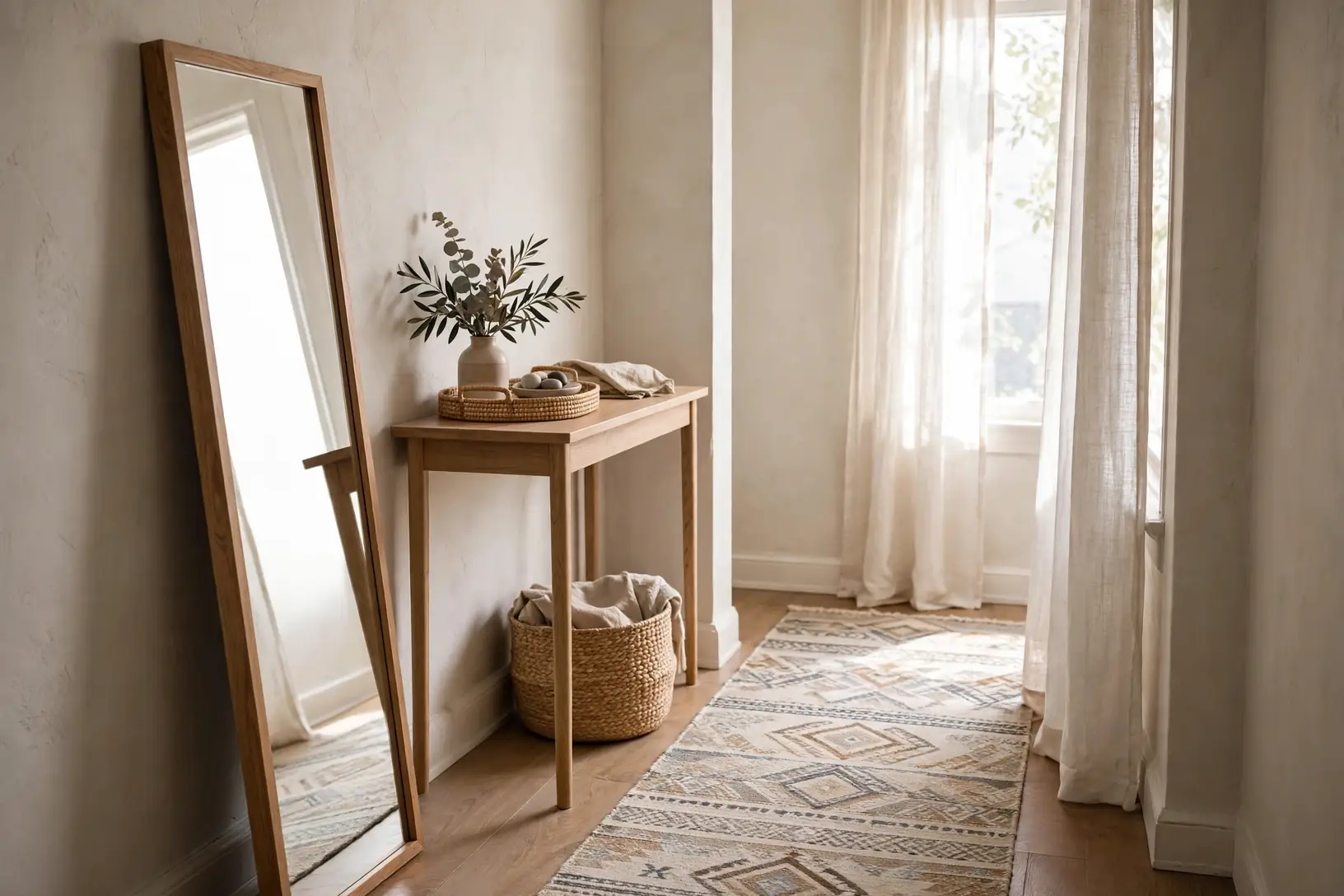
1. No Foyer? No Problem: These Renter Friendly Entryway Ideas Start With a Slim Console Table
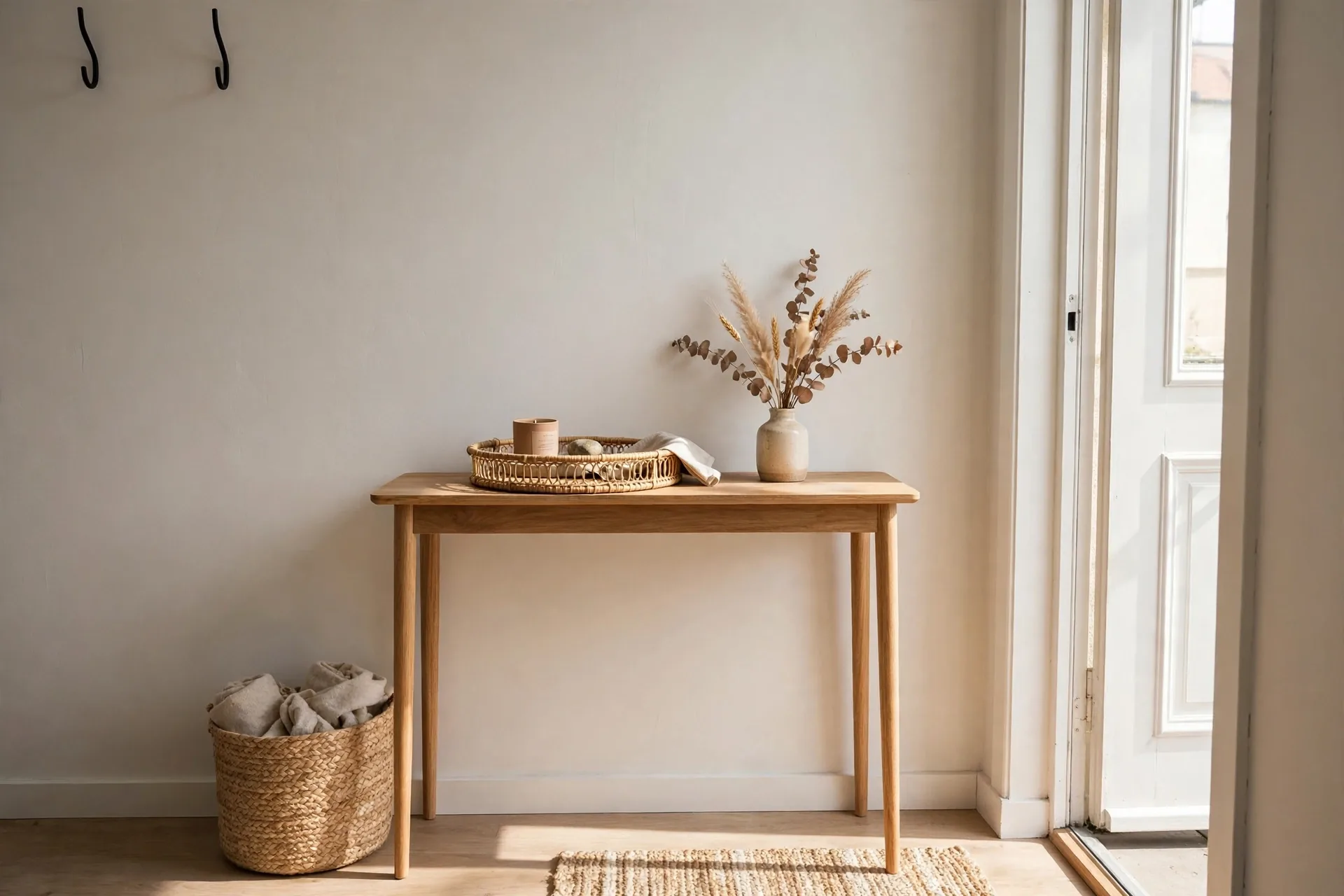
Every entryway needs a landing strip, a surface where keys, mail, and sunglasses live the second you walk in. A slim console table, just 10 to 12 inches deep, creates that zone against any wall near your front door without blocking the walkway. It is the single highest-impact piece in this whole guide.
Choose a freestanding console in wood or metal for $60 to $120, and place it within arm’s reach of the door handle side. Style it simply: a tray to corral small items, a small lamp or candle, and one tall vase with branches for height. Measure your wall first, because a console that is too long will crowd the door swing.
There is nothing to uninstall on moving day. Unscrew nothing, patch nothing: just style it, use it, and carry it to your next apartment where it works equally well behind a sofa or under a window.
2. Can a Mirror Double Your Entryway? Lean a Full-Length Floor Mirror
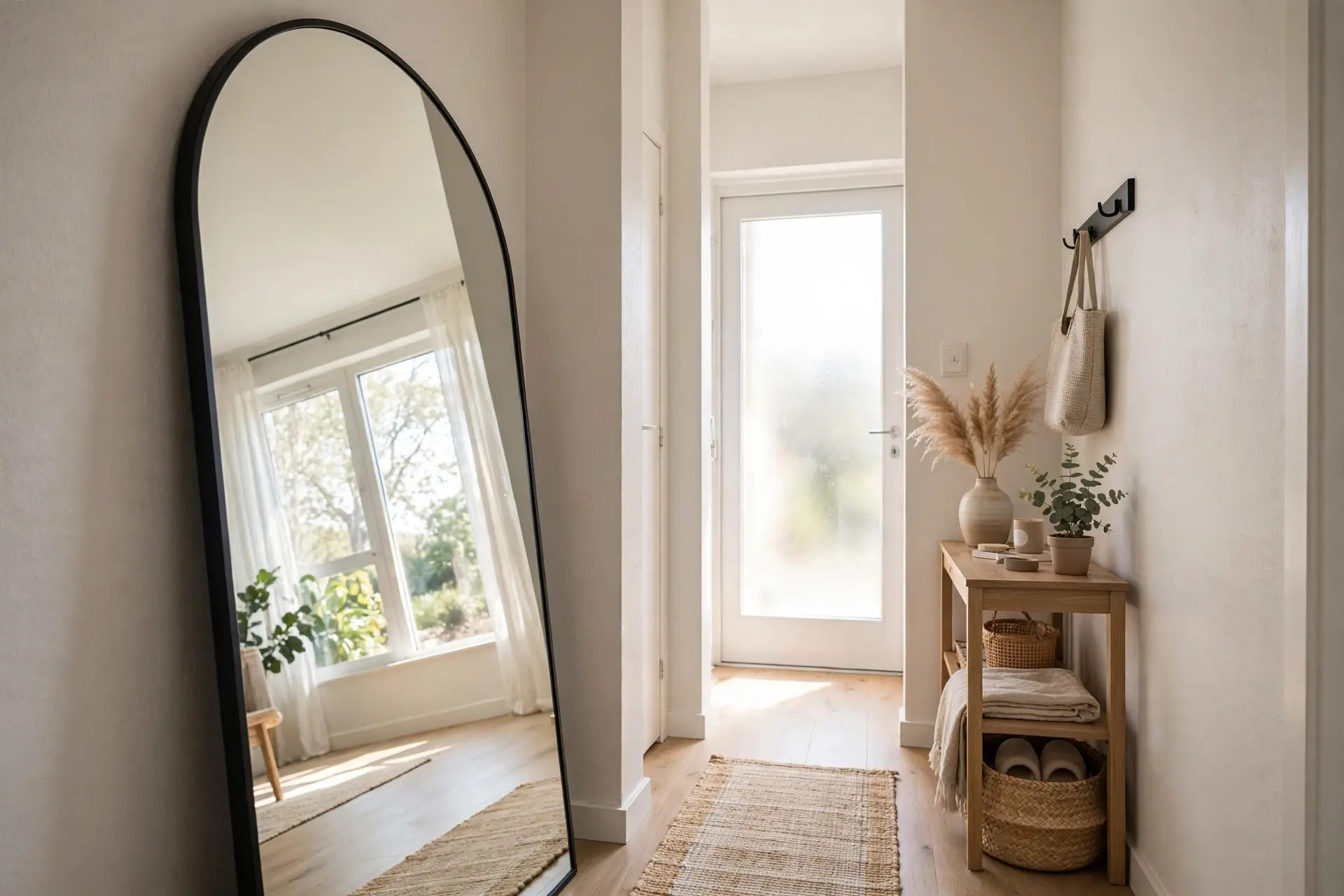
A full-length mirror leaning against the wall is the oldest small-space trick in the book, and entryways benefit most. It bounces whatever daylight you have deep into a dark hall, makes a narrow passage feel twice as wide, and gives you a last look at your outfit before you leave.
Pick a mirror at least 60 inches tall with a simple frame, usually $70 to $140, and lean it at a slight angle against a sturdy wall near the door. Angle it to catch a window or light source for maximum brightness. For safety, press small adhesive bumper pads behind the top edge so it cannot slide on hard floors.
On moving day it lifts away in seconds with zero wall repair. If you ever want it hung properly later, that is a homeowner project: as a renter, leaning is the damage-free answer.
3. Where Do Coats Go With No Closet? Hang a Row of Adhesive Wall Hooks
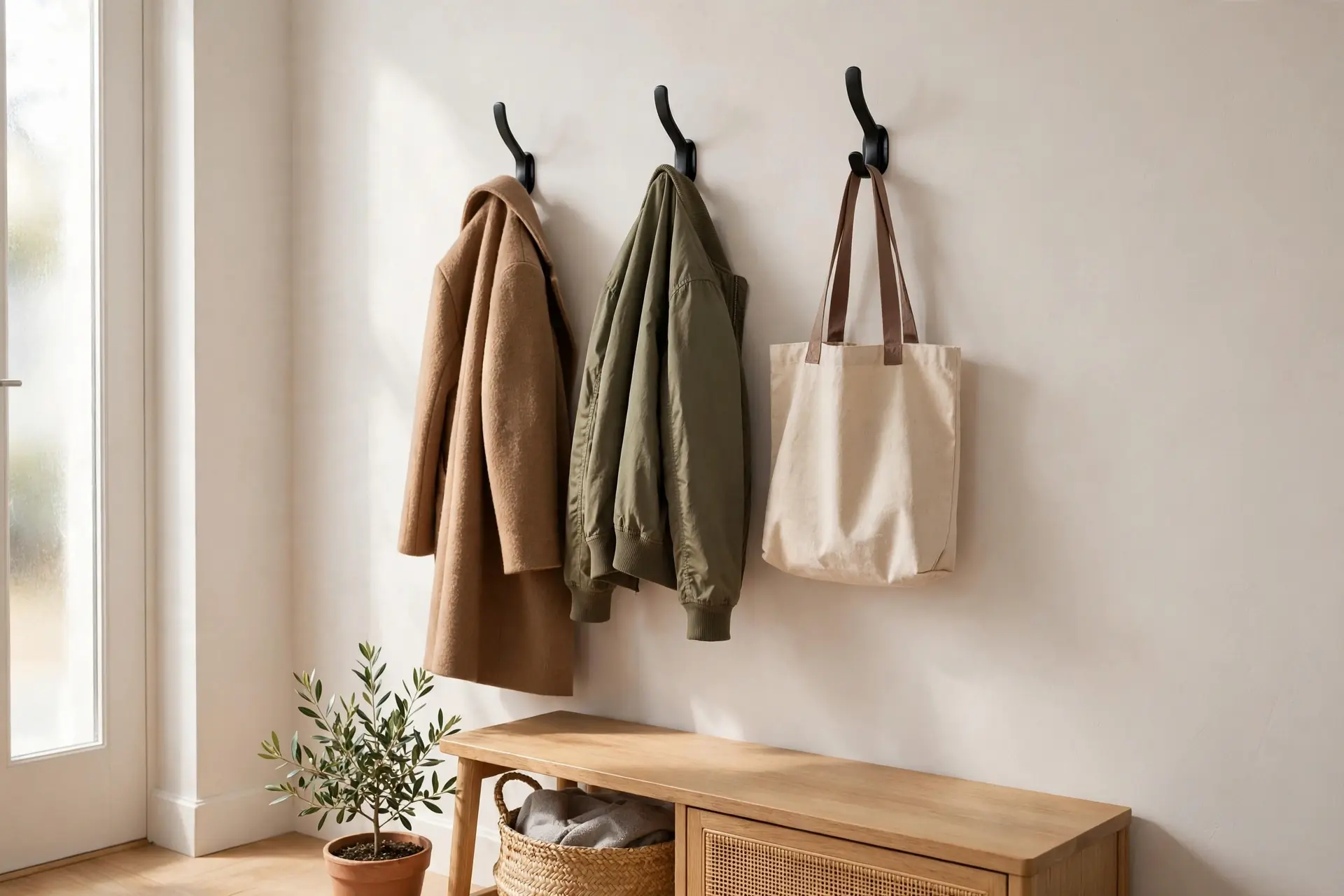
No coat closet is the classic rental complaint, and a row of adhesive hooks solves it in twenty minutes. Mount three to five hooks in a staggered row at different heights: high for coats, lower for kids’ backpacks and dog leashes. It looks intentional, like a designed mudroom wall.
Clean each spot with rubbing alcohol and let it dry completely, then press the hook firmly for 30 seconds and wait a full hour before hanging anything. Check the weight rating and use two hooks for heavy winter coats. Apartment Therapy’s small entryway organization guide has great layout inspiration if you want to plan the spacing on paper first.
A multi-pack of quality hooks costs $10 to $20. To remove, pull each stretch tab slowly straight down toward the floor, never outward, and the adhesive releases cleanly with no paint damage.
4. Is the Back of Your Door Wasted Space? Add an Over-the-Door Organizer
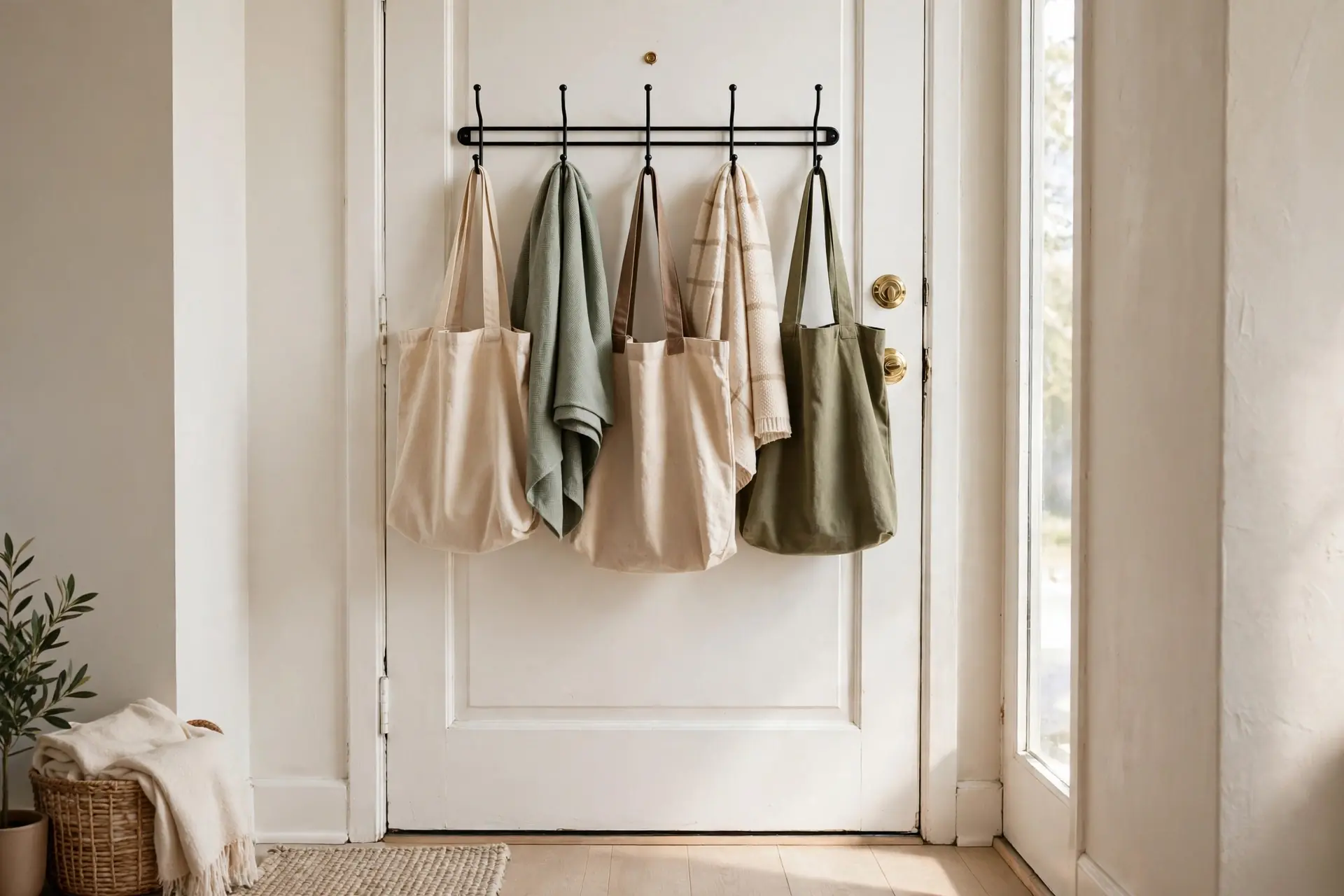
The back of your front door is free real estate. Over-the-door hooks and pocket organizers hang from flat metal brackets that slide over the top of the door, no screws, no drilling, no landlord discussion needed. Use them for the items you grab daily: keys, sunglasses, a reusable shopping bag, the dog leash.
Before buying, check the gap above your door: most brackets need about a quarter inch of clearance to close properly. Choose felt-lined brackets so they do not scratch the door’s top edge. A sturdy hook rack costs $12 to $20, and a fabric pocket organizer runs $15 to $25.
Removal is instant: lift it off the door. Keep the load reasonable so the door still closes and latches smoothly, and avoid organizers that bang against the door every time it moves.
5. Need Somewhere to Sit and Stash Shoes? Try a Narrow Storage Bench
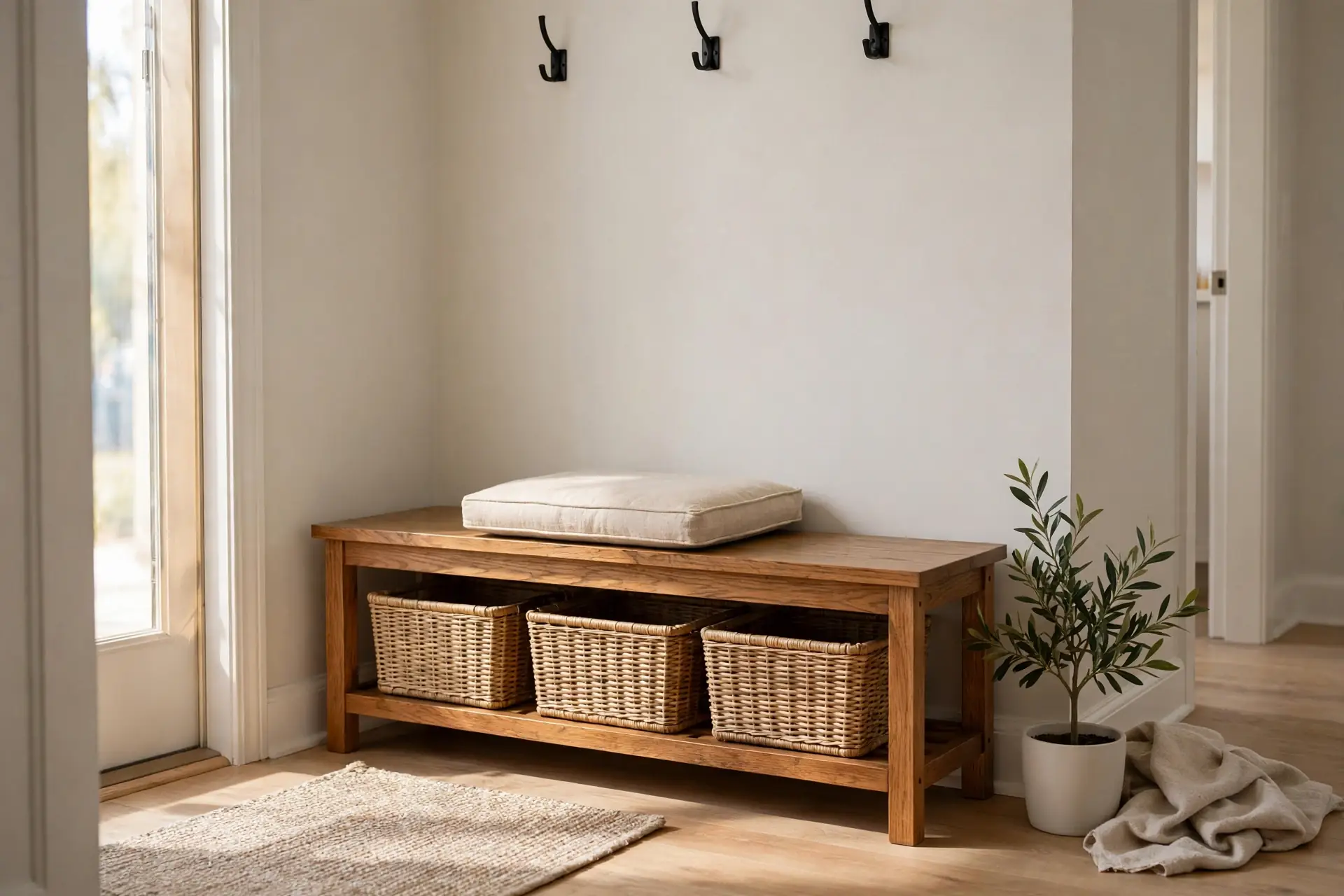
A narrow bench does double duty: a seat for pulling on boots and hidden storage for the shoe pile. Look for a bench 12 to 14 inches deep with open cubbies or a flip-top lid, slim enough to hug the wall in a tight hallway.
Slide two or three woven baskets into the cubbies and assign one per person, which ends the mystery of whose shoes are whose. Top the bench with a washable cushion for comfort. Expect to spend $50 to $100 for a solid wood or sturdy MDF bench that will survive several moves.
Because it is freestanding, it simply walks out with you on moving day. In your next place it can live at the foot of a bed or under a window, which makes it one of the most reusable purchases on this list.
6. How Do Renter Friendly Entryway Ideas Define a Space? With a Washable Runner Rug
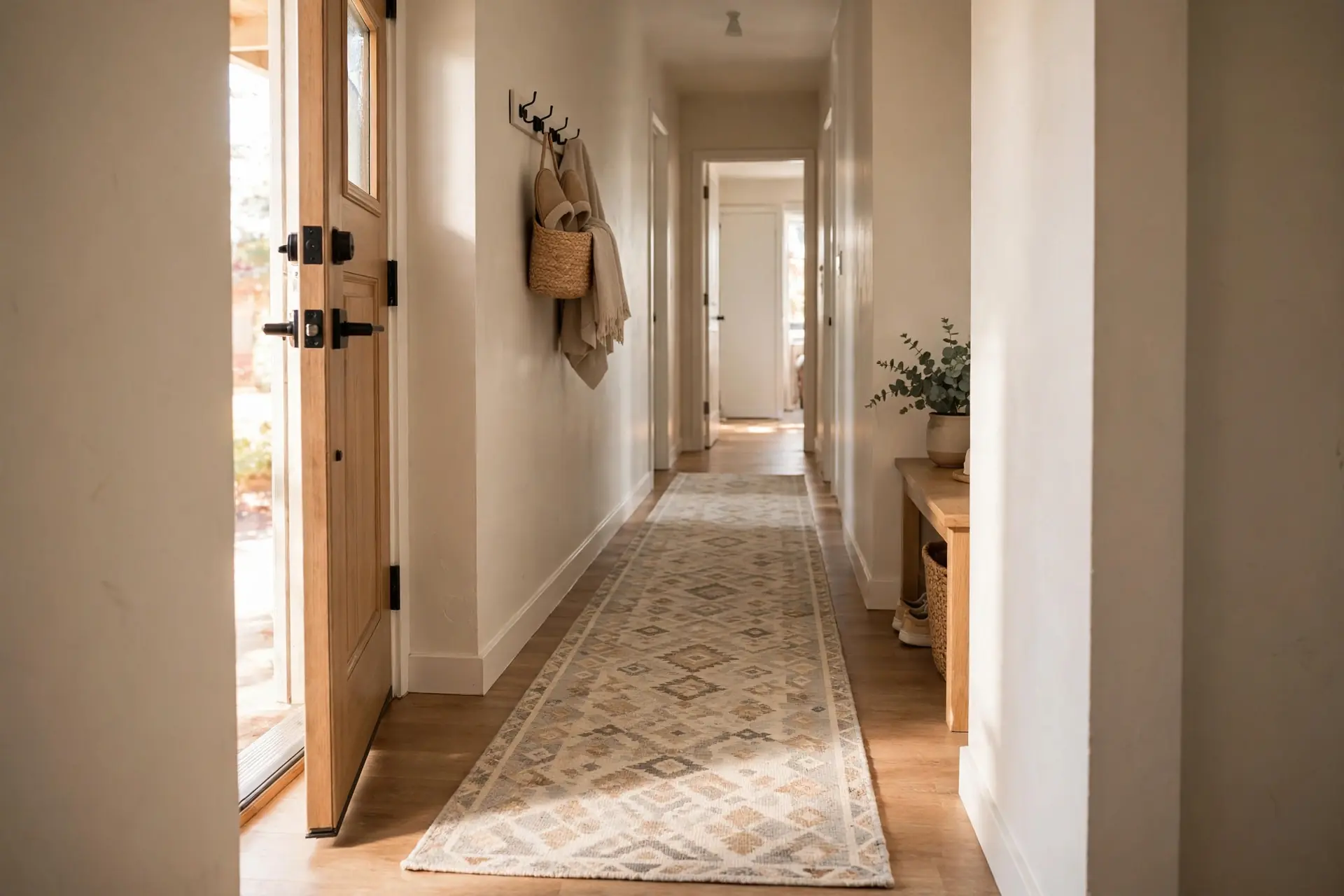
When your door opens straight into the living room, a runner rug draws the line: this strip is the entryway, everything past it is home. It also catches dirt, salt, and wet footprints before they reach your floors, which your landlord will silently thank you for.
Choose a low-pile, machine-washable runner in a 2×6 or 2×8 size, usually $30 to $70. Lay a thin non-slip rug pad underneath so it stays put on hard floors and does not become a trip hazard. Washable rugs are a theme across rental decorating: we lean on them in our renter-friendly bathroom upgrades for the same easy-clean reason.
On moving day, toss it in the wash, roll it up, and take it along. A washable runner is one of the few decor items that actually gets better with each apartment because it protects every floor it meets.
7. Want Instant Personality on One Wall? Add a Peel-and-Stick Wallpaper Accent
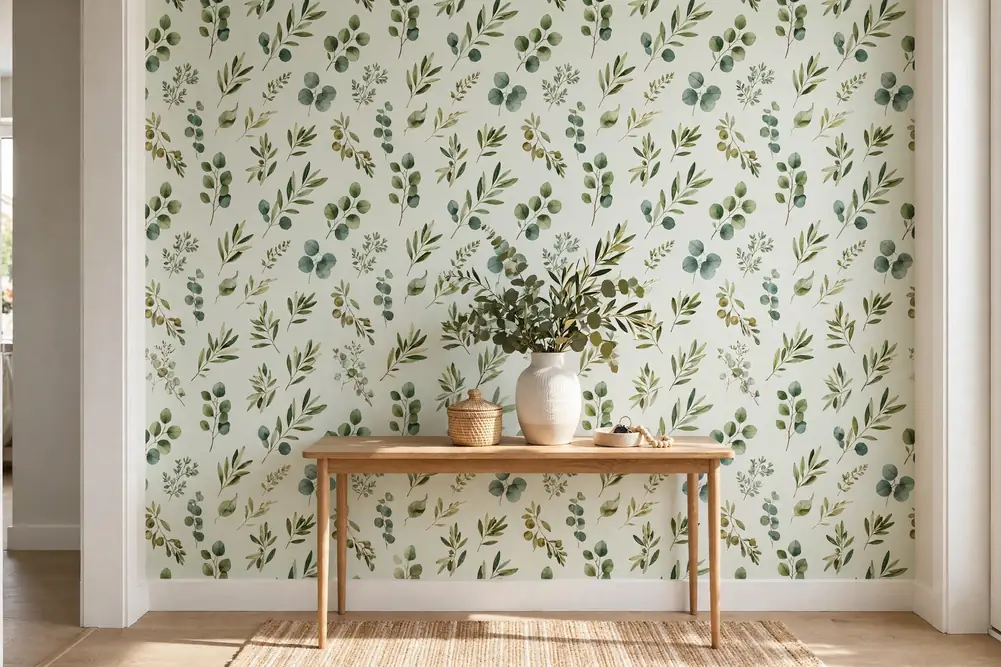
An entryway is the perfect place for bold wallpaper because the area is small: one statement wall costs little and makes every arrival feel special. Peel-and-stick wallpaper gives you real pattern and texture with zero paste and zero commitment.
Measure the wall and order about 10 percent extra. Start at the top, peel a few inches of backing, and smooth downward with a credit card or plastic squeegee to chase out bubbles. Trim neatly at the baseboard with a craft knife. A small entryway wall usually needs just 1 to 2 rolls, about $25 to $50 total. We used the same technique on a larger scale in our renter-friendly wall decor ideas, so check that guide for pattern-matching tips.
For removal, peel slowly at a sharp angle close to the wall and warm stubborn spots with a hair dryer for 20 seconds. Test a hidden patch for a week before you commit, since old or chalky paint is the one thing that can lift.
8. How Do I Add Entryway Light Without Wiring? Install a Plug-In Wall Sconce
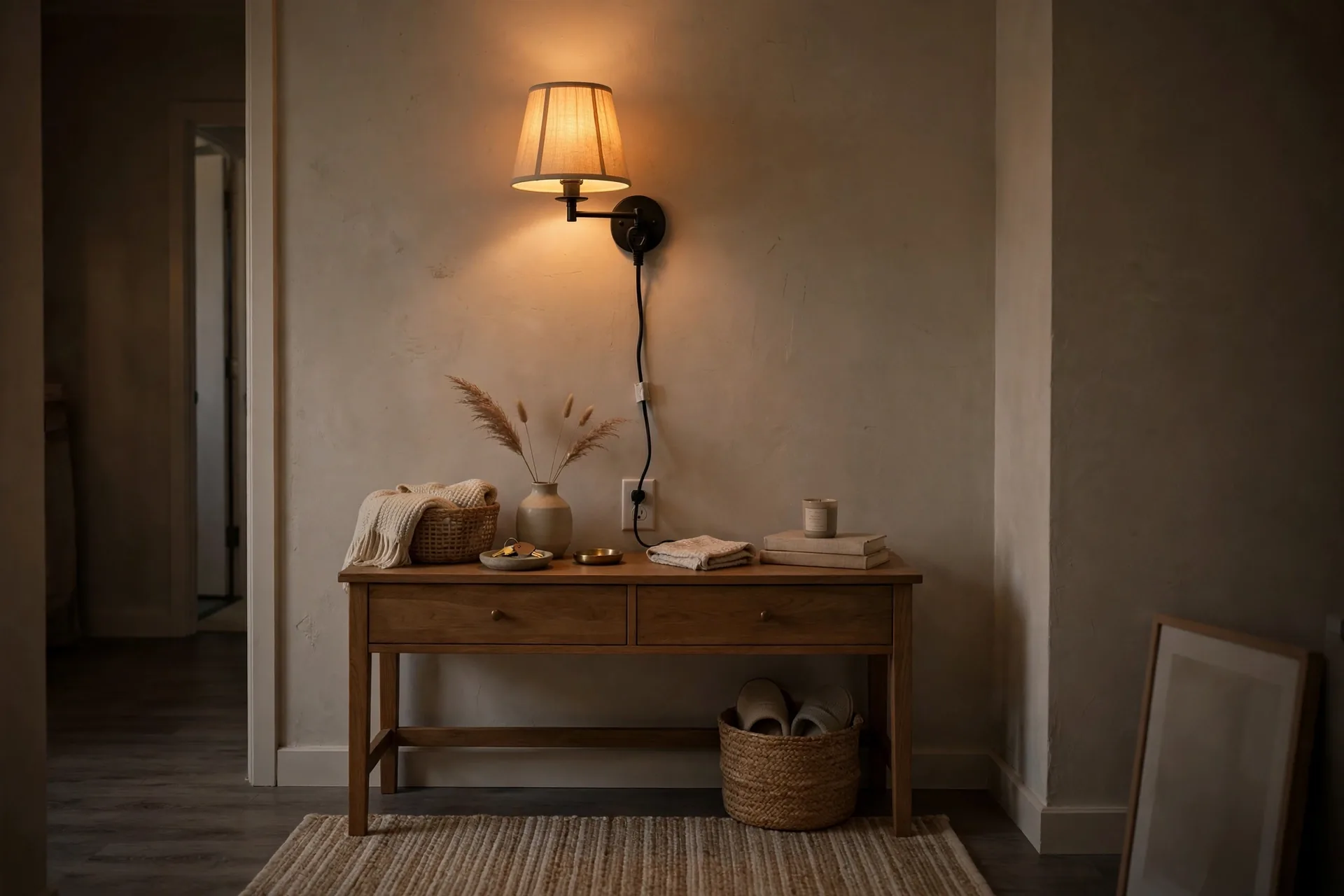
Most rental entryways have one harsh ceiling light or none at all. A plug-in wall sconce adds the warm, welcoming glow of a proper foyer with no electrician and no wiring: it simply plugs into the nearest outlet.
Hang the sconce with a heavy-duty adhesive hook rated for its weight, then hide the cord in a paintable stick-on cord cover that runs down to the outlet. Choose a warm-white bulb around 2700K for that golden welcome-home tone. A good-looking plug-in sconce costs $25 to $45, plus about $10 for the cord cover.
Moving day reversal is easy: unplug it, peel off the cord cover slowly, and pull the hook tab downward. Keep the cord cover away from high-traffic edges where it could catch a shoe.
9. Always Losing Your Keys? Set Up a Small Catch-All Tray
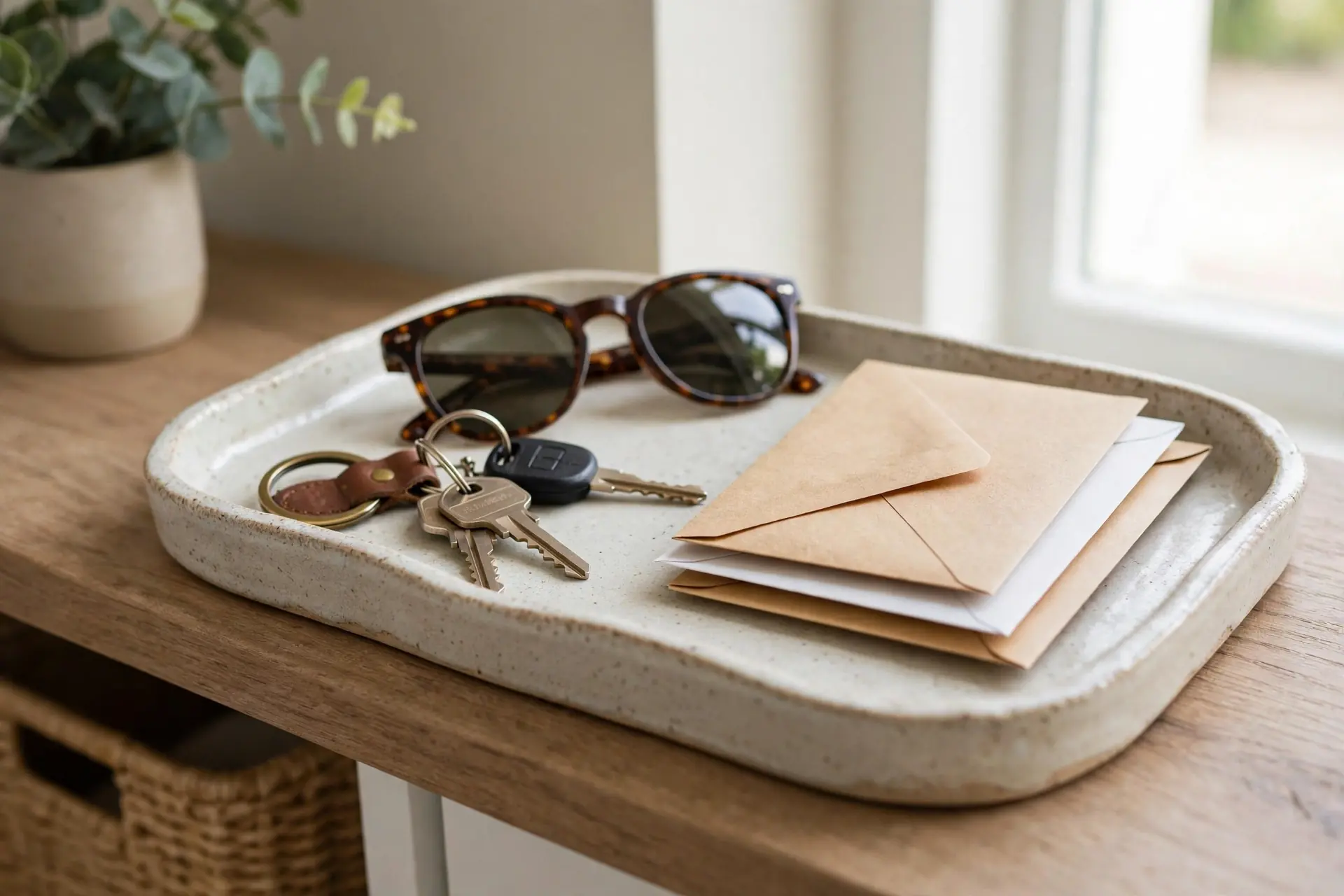
The cheapest idea on this list is also the one you will use every single day. A small tray on your console gives keys, wallet, sunglasses, and incoming mail one permanent home, which ends the frantic pocket-patting before you leave.
Pick a tray with a lip so nothing slides off: woven seagrass, ceramic, or leather-look, $10 to $25. Place it on the console closest to the door and build the habit for one week: everything lands in the tray the moment you walk in. Sort the mail stack weekly so the tray never becomes a paper mountain.
There is zero installation and zero removal. It is pure organization, and it travels from apartment to apartment without a second thought.
10. Where Do Shoes Go Without a Closet? Corral Them in Woven Baskets
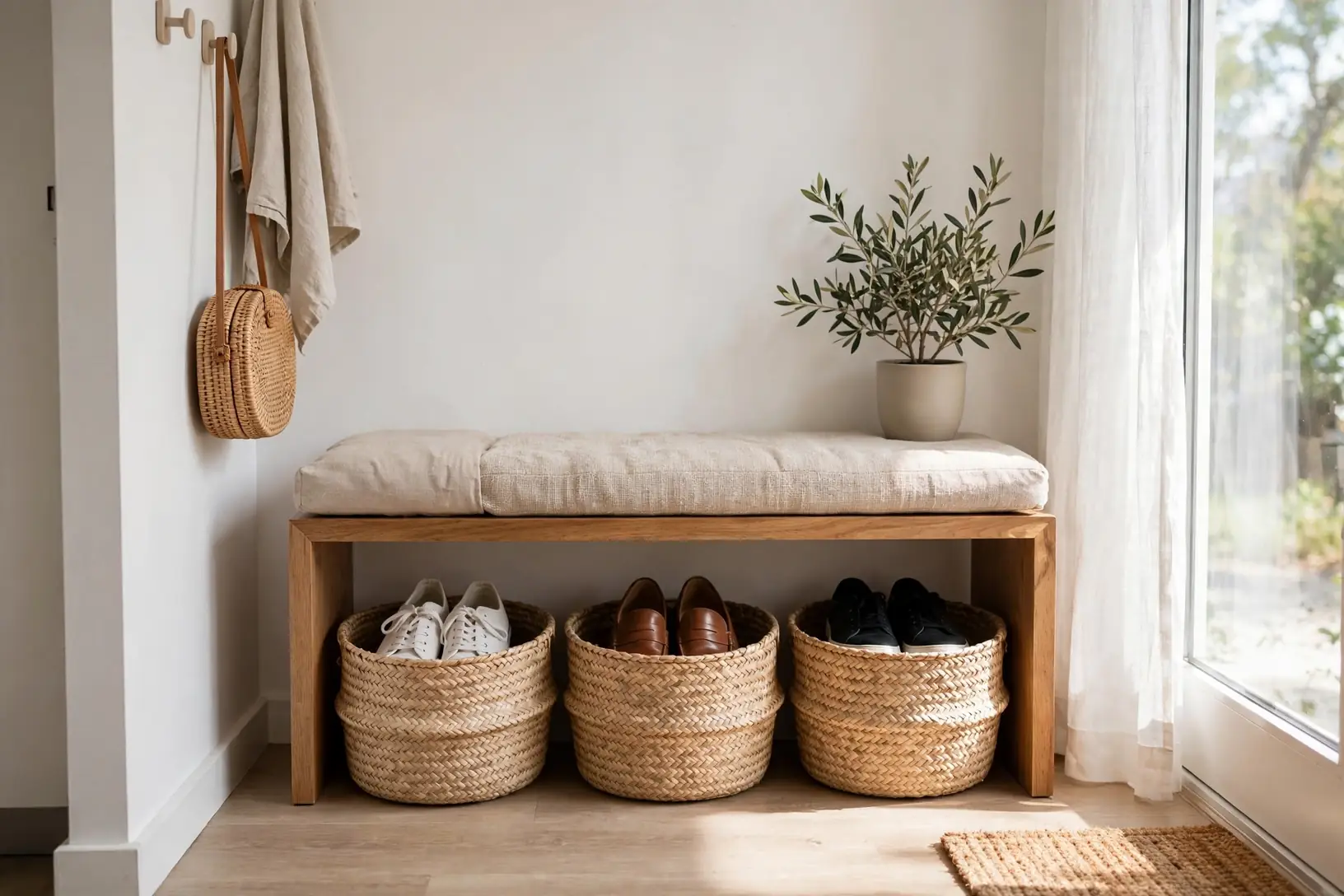
Shoes multiply by the door in every rental. Two or three woven baskets tucked under your bench or console contain the chaos and look far better than a sprawling shoe pile, while letting air circulate so things do not get musty.
Choose open-top baskets so shoes are easy to grab, about $12 to $25 each. Enforce a simple house rule: one everyday pair per person lives by the door, everything else goes to the bedroom. Line the bottom with a washable mat if your climate means wet boots.
Baskets are freestanding and endlessly reusable: under a console today, on a closet shelf tomorrow. On moving day, just stack them inside each other and go.
11. No Wall Space for Hooks? Stand Up a Freestanding Coat Rack
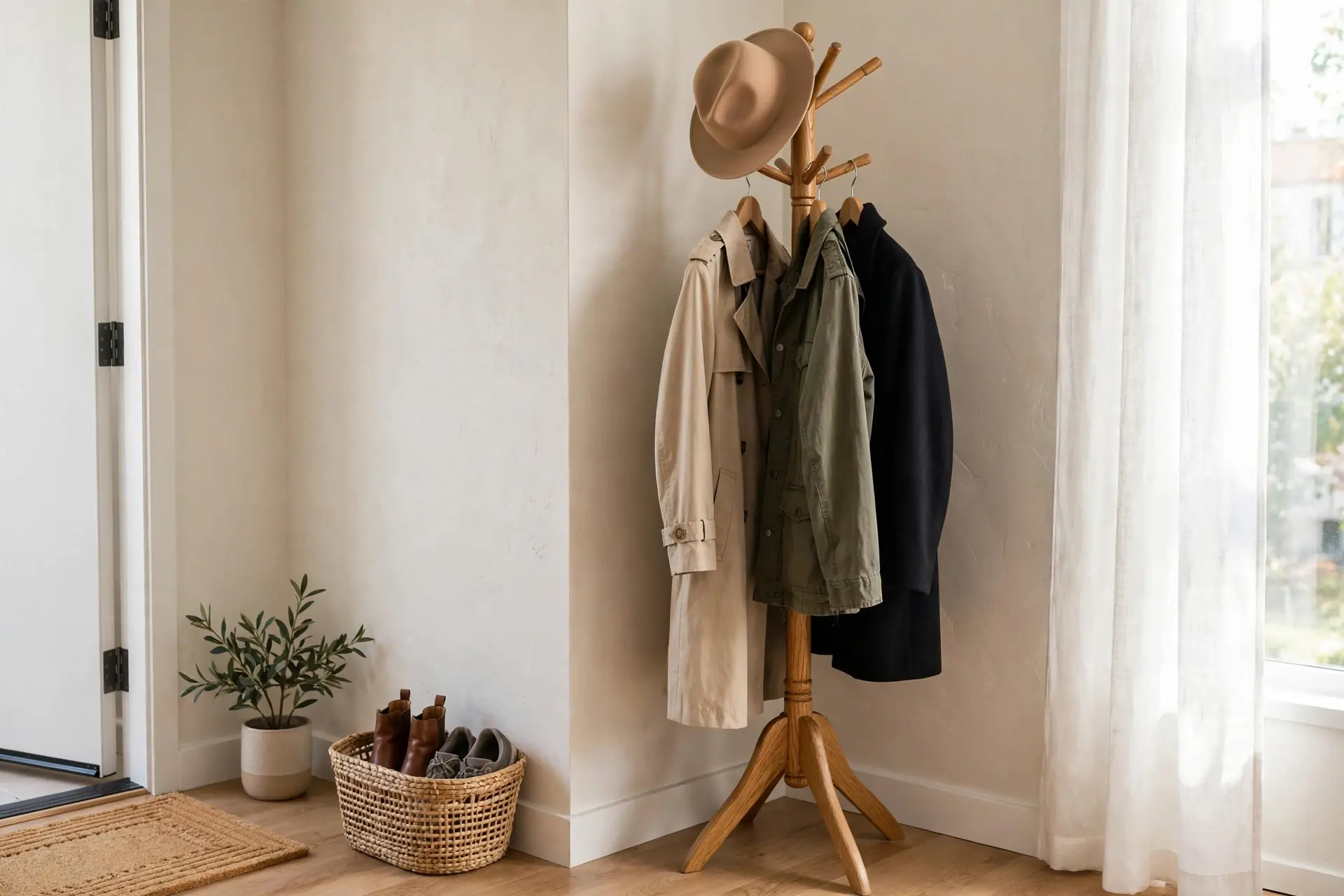
If your entryway walls are all windows, doors, or radiators, a freestanding coat rack claims a corner and holds everything hooks would. Hall-tree styles with a small bench base are sturdiest, while simple valet stands suit minimalists.
Look for a wide, weighted base so it cannot tip when loaded with winter coats: $30 to $70 for a solid wood or metal rack. Keep the heaviest items on the lowest pegs and never hang a loaded backpack on the very top. Place it where the door swing will not smack it.
It needs no assembly beyond the initial setup and no wall contact at all. When the lease ends, it disassembles or carries out whole, ready for the next entryway.
12. Want a Real Foyer Feel? Divide the Space With a Tension-Rod Curtain
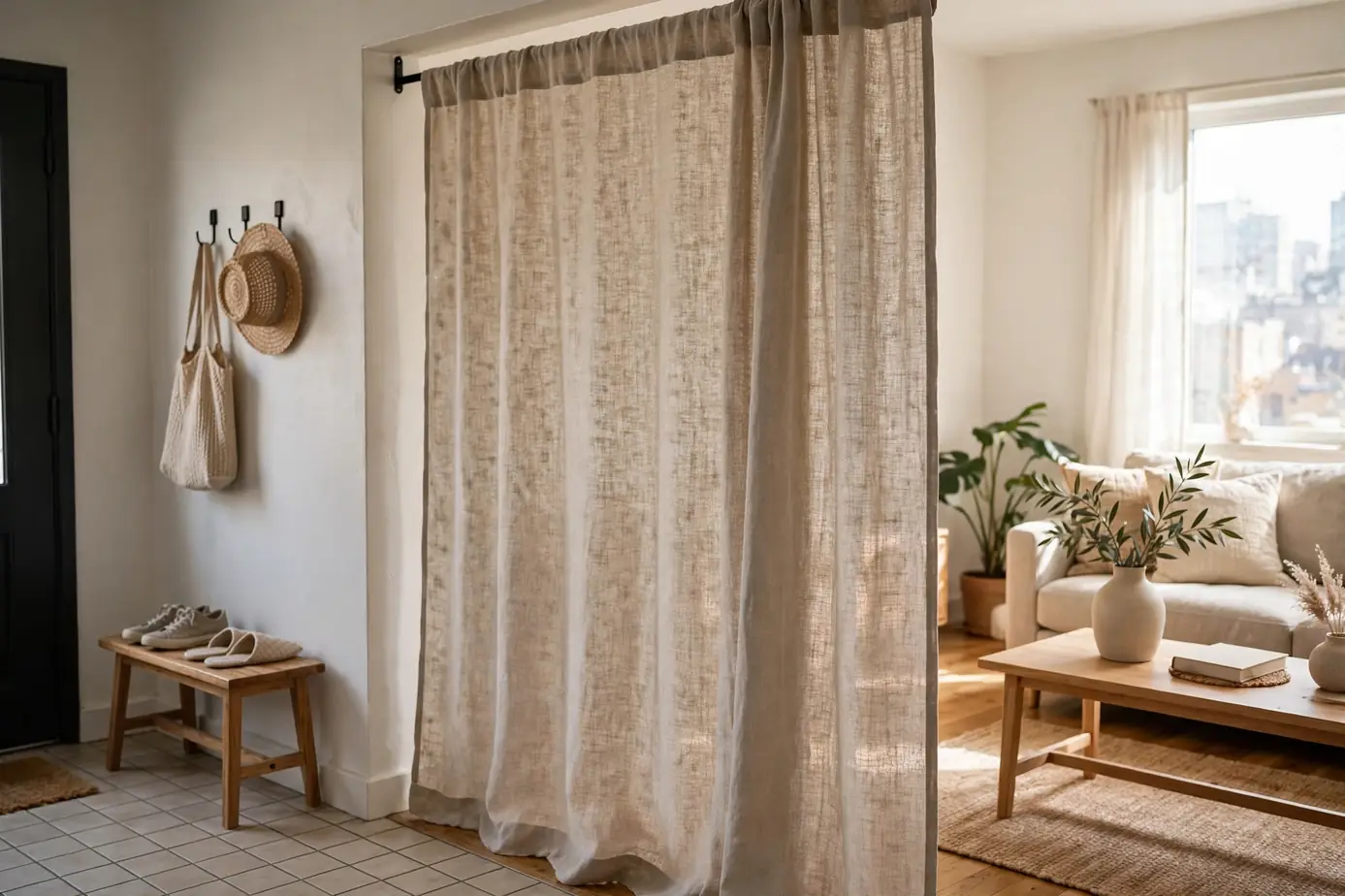
In studios and open layouts, a floor-length curtain panel on a tension rod creates a visual foyer where none exists. It softens the sightline from the door, hides the shoe zone from guests, and adds welcome softness and texture.
Mount a spring tension rod high in a hallway opening or between two walls, and hang one linen or cotton panel that just kisses the floor. A sturdy rod costs $15 to $30 and a panel runs $20 to $40. Keep the fabric light in color so it does not darken the entry.
Removal takes seconds: twist and collapse the rod. If the span is very wide, use two rods meeting in the middle, or choose a twist-fit rod with rubber ends that brace gently against the walls.
13. No Nails Allowed? Renter Friendly Entryway Ideas Love Leaning Framed Art
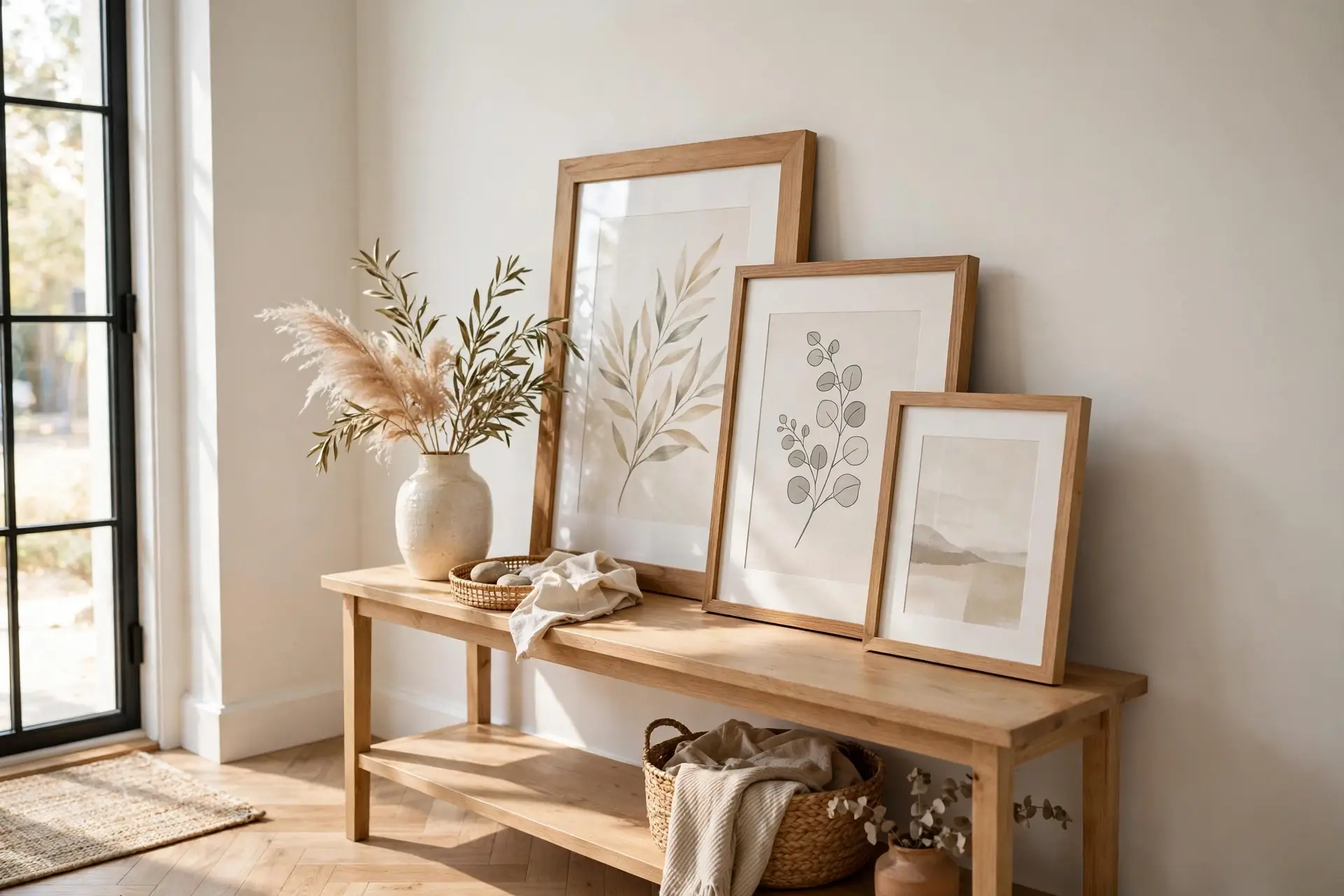
Blank walls make an entryway feel like a corridor, but nails are off the table. Leaning art is the answer: a large framed print propped on your console, or an oversized frame leaning directly on the floor, gives you gallery style with zero holes.
Thrift stores are full of solid frames for $5 to $15: add your own print for a custom look. Layer two frames in different sizes, tallest at the back, for a collected feel. This is a mini version of the gallery wall approach in our renter-friendly living room ideas, just without a single adhesive strip. For heavier frames, add small adhesive bumper pads behind them so they sit stable.
When you move, the art lifts off the console and travels flat in your car. Nothing to patch, nothing to fill, and your walls stay exactly as the landlord left them.
14. What Makes an Entryway Feel Alive? A Small Plant on the Console
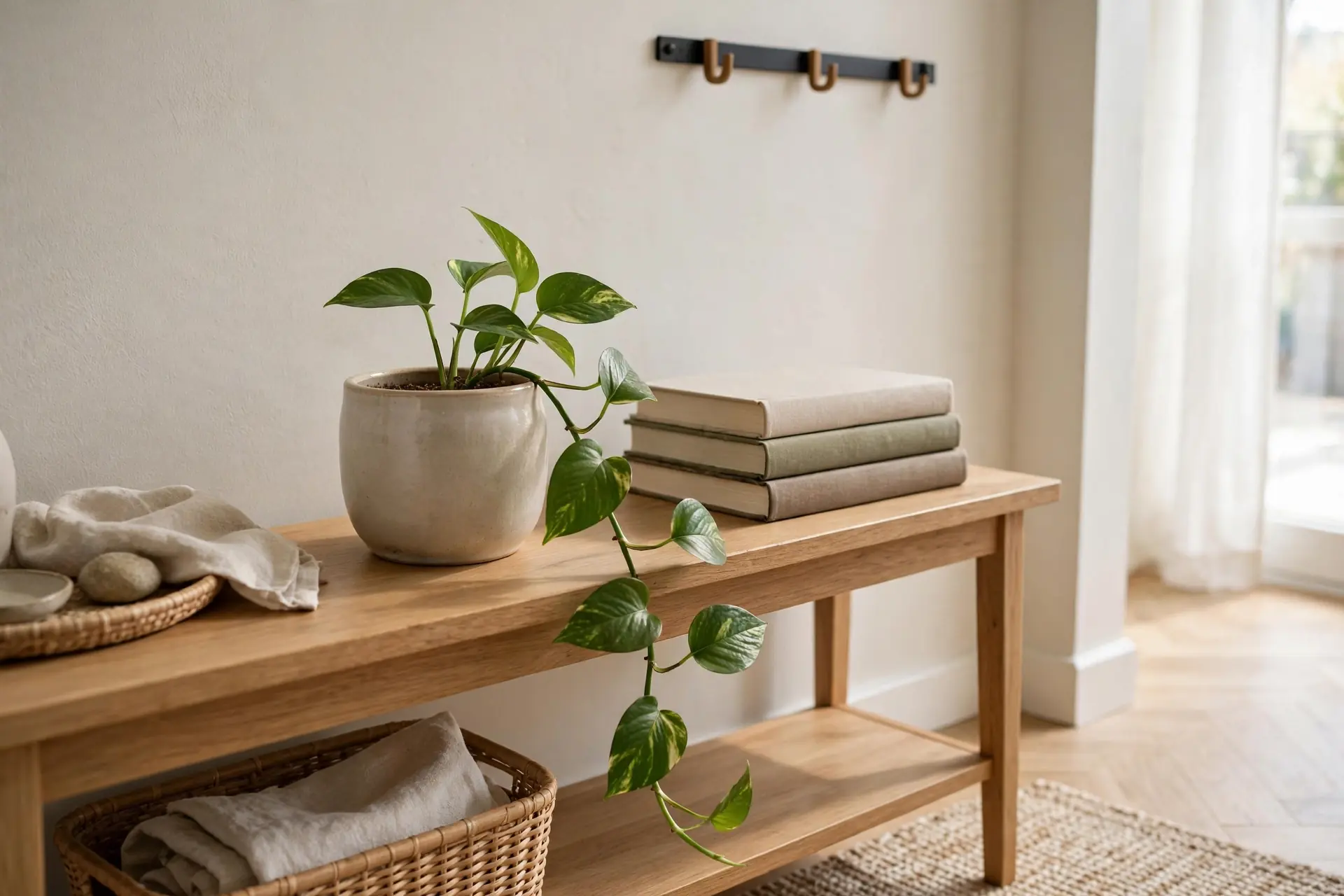
One living plant changes an entryway from a pass-through into a place. Greenery softens hard corners, adds color without paint, and signals that someone cares about this home, all for the price of a coffee.
Choose a forgiving plant that tolerates lower light, like a pothos or snake plant, $10 to $25 in a nursery pot. Set it in a pretty ceramic cachepot with a saucer or waterproof liner so water never reaches your console or the rental floor. Wipe the leaves monthly and water only when the top inch of soil is dry.
Plants move with you, obviously, and a healthy pothos can be propagated into free plants for every future apartment. If your entryway is truly cave-dark, a good faux plant in a real-looking pot is an honest backup.
15. Can Flooring Define an Entryway? Try Peel-and-Stick Floor Tiles
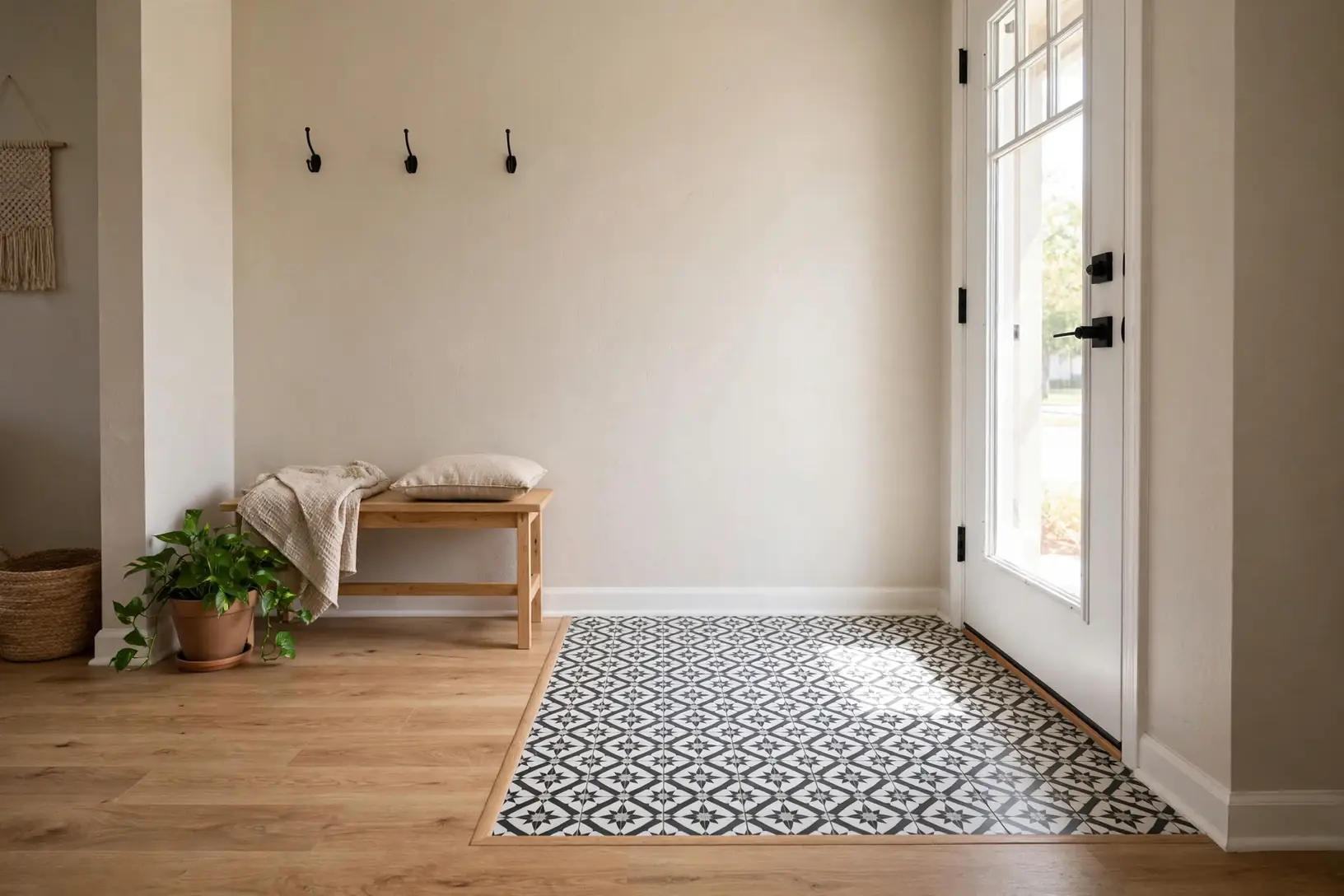
Think of this as a rug you cannot trip on: a patch of patterned peel-and-stick vinyl tiles laid right inside the door creates a crisp, defined entry zone that wipes clean with a damp mop. It reads as intentional design, not a workaround.
Measure your zone, usually a 3×5 foot rectangle, and lay the tiles from the door outward so the cut edges hide under the console. Press each tile firmly and roll over them with a rolling pin for full adhesion. A small area needs $20 to $40 of tiles. Apartment Therapy’s renter-friendly flooring roundup is worth a skim for pattern ideas and brand comparisons.
Test one tile in a hidden spot for a week first, then peel up slowly on moving day, warming stubborn corners with a hair dryer. The original floor underneath stays untouched.
The renter friendly entryway ideas above are all reversible, but a few ground rules keep them that way. Follow these pro tips to get the most from these renter friendly entryway ideas.
Renter Entryway Mistakes to Avoid: Pro Tips
Read your lease’s decoration clause before you buy anything, so you know exactly what counts as damage in your building. Photograph the entryway walls, floor, and door on move-in day: that timestamped proof protects you from blame for pre-existing scuffs. Test every adhesive product on a hidden spot for a full week before committing to a visible wall.
Skip cheap masking tape and duct tape on painted walls, since they pull paint on removal. Do not overload adhesive hooks past their weight rating: a fallen coat rack at 2 a.m. is funny once and a wall repair the second time. And never stick anything directly to wallpaper or textured finishes your landlord installed, because those surfaces are far less forgiving than plain painted drywall.
These renter friendly entryway ideas prove that the smallest space in your rental can make the biggest first impression. Start with a console, a runner, and a tray this weekend, and build your welcome-home zone from there.
Final Thoughts: A Welcome Home That Moves With You
The best renter friendly entryway ideas all share one trait: they are completely reversible. From leaning mirrors to washable runners to peel-and-stick tiles, every idea in this guide lets you enjoy a warm, organized arrival now and walk away with your full deposit later.
Start with the landing strip: a slim console, a catch-all tray, and somewhere for your shoes. Those three pieces solve 90 percent of entryway chaos. Your rental may not be forever, but there is no reason the first thing you see when you walk in should not feel like home.
Frequently Asked Questions
I have no foyer at all. Where do I even start?
Start with the landing strip: a slim console table within arm’s reach of the door, a small tray for keys and mail, and a washable runner to mark the zone. Those three pieces create the function of a foyer in any blank wall or hallway, and every one of these renter friendly entryway ideas builds on that foundation.
How do I store shoes in an entryway with no closet?
Use a narrow storage bench with woven baskets underneath, or line up two to three baskets under your console. Keep one everyday pair per person by the door and store the rest in the bedroom. An over-the-door shoe organizer also works if your door has the clearance, and it needs zero installation.
How can I hang things in my entryway without drilling?
Use adhesive hooks and picture-hanging strips rated for the weight, over-the-door organizers that need no screws, tension rods that brace between walls, and leaning pieces like mirrors and framed art. Always clean the spot with rubbing alcohol first, wait the full cure time on the package, and remove adhesive tabs by pulling slowly downward.
How do I make a small entryway feel bigger?
Lean a tall mirror to bounce light and double the visual space, keep the palette light, and let a runner rug draw the eye forward so the area feels longer. Good lighting matters most: a plug-in sconce with a warm 2700K bulb makes a dark entry feel open and welcoming after sunset.
Do I need my landlord’s approval for these renter friendly entryway ideas?
Most landlords accept fully reversible changes like freestanding furniture, rugs, and removable adhesives without a second thought. Always check your lease first, and get written permission for anything that touches the walls or floors, since that paper trail protects your security deposit on move-out day.